
How to Make Non-Actors Feel Comfortable on Camera

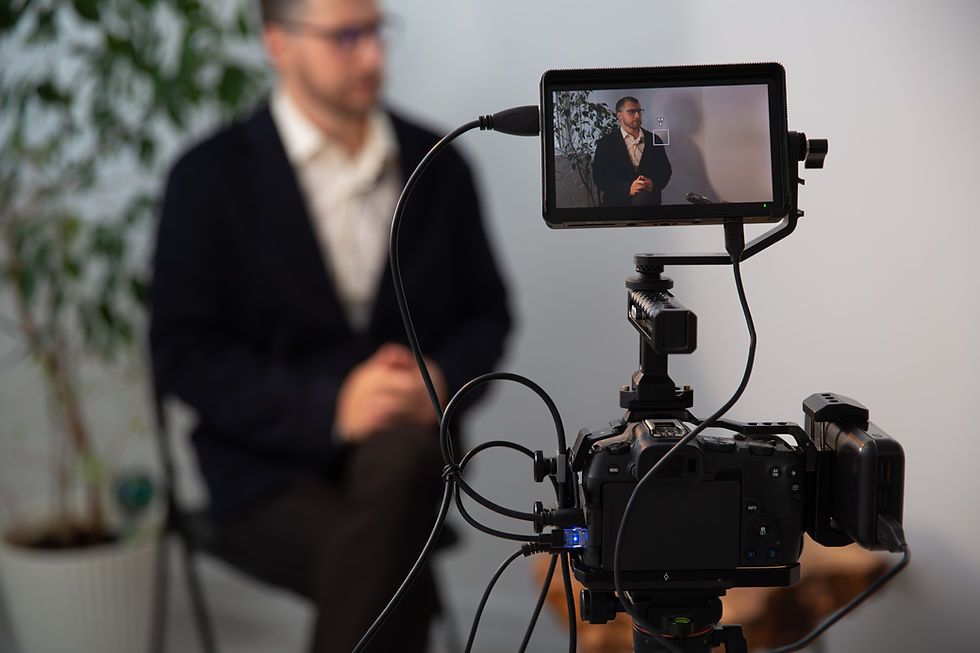
One of the most common concerns organizations have when planning a video project is:
“Our team isn’t used to being on camera.”
That’s completely normal.
Most of the people featured in professional videos—students, staff, clients, or community members—are not actors. And they shouldn’t have to be. In fact, authentic voices are often the most compelling part of a story.
The key is creating an environment where people feel comfortable enough to speak naturally. Here are some of the techniques professional video teams use to help non-actors relax and deliver genuine moments on camera.
1. Start With Conversation, Not Performance
Before filming begins, it helps to spend a few minutes simply talking.
Instead of jumping straight into recording, experienced producers take time to:
Explain what the shoot will look like
Walk through the general questions
Build rapport with the interview subject
When people feel like they’re having a conversation rather than giving a performance, their responses become more relaxed and authentic.
2. Use Questions, Not Scripts
Memorized scripts often create stiffness.
Instead of asking people to recite lines, most professional interview-style videos rely on guided questions. This allows participants to respond in their own words.
The result is:
More natural language
Genuine emotion
A tone that feels human rather than rehearsed
Editing then shapes those responses into a clear narrative.
3. Create a Comfortable Environment
Cameras and lights can feel intimidating at first.
A good production team minimizes this pressure by:
Keeping the crew small when possible
Positioning cameras unobtrusively
Allowing time to adjust before recording
Often, once the conversation begins, participants quickly forget the equipment is there.
4. Embrace Imperfection
Many people worry about saying something “perfect.” The truth is that perfection isn’t the goal.
Small pauses, natural phrasing, and genuine reactions often make interviews feel more believable. And if someone stumbles over a sentence, it can simply be repeated.
Editing allows producers to select the strongest moments and shape them into a cohesive story.
5. Ask Follow-Up Questions
Sometimes the most powerful moments happen after the first answer.
Experienced interviewers often ask follow-up questions like:
“Can you tell me more about that?”
“How did that experience affect you?”
“What did that moment mean to you?”
These prompts help move beyond surface-level responses and uncover the emotion or insight that makes a story memorable.
6. Focus on the Message, Not the Camera
One simple technique helps almost everyone relax:
Look at the interviewer, not the camera.
This turns the experience into a conversation instead of a performance. When participants focus on the story they’re sharing rather than the equipment around them, their delivery becomes much more natural.
The Takeaway
You don’t need professional actors to create a compelling video. With the right approach, anyone can communicate their story naturally on camera.
A thoughtful production process focuses on:
Conversation rather than performance
Questions rather than scripts
Comfort rather than pressure
When people feel at ease, the most meaningful moments tend to emerge naturally.
Planning a Video Project?
If your team is new to being on camera, don’t worry. Guiding non-actors through the process is a normal part of professional video production.
Contact BrightCore Films to start a conversation about creating authentic video stories that feel natural, comfortable, and true to your organization.


Comments